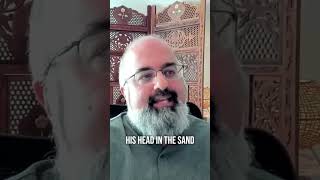
What Empire Cannot Erase with Prof. Fatemeh Keshavarz and Omid Safi, facilitated by Mays Imad
5,766
2026-04-20
0

ScienceandNonduality
You can watch all our videos at https://scienceandnonduality.com
We are watching, once again, what empire does: not only to bodies, but to the long memory of a people; to the libraries and sacred sites; to art, language, and the ruins that hold the oldest threads of human spiritual inquiry.
We are thinking of the civilization that gave us Rumi, Hafez, Omar Khayyam, Forough Fa...
You can watch all our videos at https://scienceandnonduality.com
We are watching, once again, what empire does: not only to bodies, but to the long memory of a people; to the libraries and sacred sites; to art, language, and the ruins that hold the oldest threads of human spiritual inquiry.
We are thinking of the civilization that gave us Rumi, Hafez, Omar Khayyam, Forough Farrokhzad — mystics and rebels and lovers of paradox who understood something about the human soul that we are still, centuries later, trying to catch up to.
This gathering is an invitation to come together: to read poetry aloud, to hear from Iranian voices, to sit with grief and beauty together rather than alone.
We work with political and moral vocabulary shaped by Iranian thinkers such as Ali Shariati, who wrote against domination, spiritual emptiness, and the violence of imposed power.
We make space for what doesn’t fit into headlines or talking points—the complexity of empire, the difference between a government and its people, the authoritarian forces at work not only abroad but here at home. We also gather with the political inheritance of those who taught generations to resist domination and spiritual emptiness, including Ali Shariati.
Fatemeh Keshavarz is the Roshan Institute Chair in Persian Language and Literature and Director of the Roshan Institute Center for Persian Studies at the University of Maryland. She is the author of award-winning books such as Reading Mystical Lyric: the Case of Jalal al-Din Rumi, Recite in the Name of the Red Rose, and Jasmine and Stars: Reading More than Lolita in Tehran, along with numerous articles. A poet in Persian and English and an advocate for peace and justice, she has spoken at the UN General Assembly and received the Peabody Award for her NPR program on Rumi.
Omid Safi is a scholar of the Islamic mystical tradition of Radical Love and serves as a professor of Islamic studies at Duke University. Ten times nominated for professor of the year awards, Omid has published extensively on the foundational sources of Islam and Sufism. He has authored Memories of Muhammad and Radical Love: Teachings from the Islamic Mystical Tradition. He has offered the annual Martin Luther King lecture and appeared as an expert on Islam in the New York Times, Newsweek, Washington Post, Al-Jazeera, PBS, NPR, NBC, BBC and CNN.
Omid teaches online courses on Muslim mysticism and has his own podcast Sufi Heart. He also offers spiritually oriented contemplative journeys and retreats for the general public. Information about the books, podcast, courses, and tours can be found at illuminatedcourses.com.
Mays Imad, PhD, is a neuroscientist, educator, and advocate whose interdisciplinary work bridges neuroscience, philosophy, and education. Fascinated by consciousness and the brain’s profound complexity, Mays explores both quantifiable physical laws and metaphysical dimensions of human experience. Her innovative approach blends scientific methodology with relational and phenomenological perspectives to deeply understand life’s intricacies.
Science and Nonduality (SAND) contemplates and reveres the beauty, complexity, pain, and great mystery that weave the infinite cycles of existence. We explore beyond ultimate truths, binary thinking, and individual awakening while acknowledging humanity as a mere part of the intricate web of life.
 01:36
01:36It is love that will take us home
 02:00
02:00I will not mourn my dead in 140 characters for your Twitter -Dr. Shahd Abusalama
 01:24
01:24小編把過年心聲寫成一首歌來拜早年!祝福大家跟家人朋友從年初到年底,都因跟隨神,謹守遵行,不偏左右,得到從天而來「金架讚」的好福氣! #過年馬上補眠 #馬力全開 #馬不停蹄 #馬上得福 
 00:00
00:00投資什麼關係 會有保證收益?|台北樣教會 吳必然 牧師 | 台北樣線上主日
 12:13
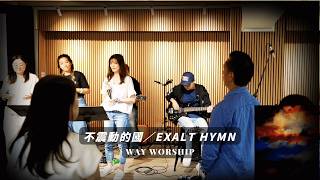
12:13不震動的國/Exalt Hymn|WayWorship 台北樣主日敬拜
༺ 資料蒐集來源: YouTube ༻
本站不需註冊加入會員,保障個人隱私,完全不用Cookei
本站不需註冊加入會員,保障個人隱私,完全不用Cookei
